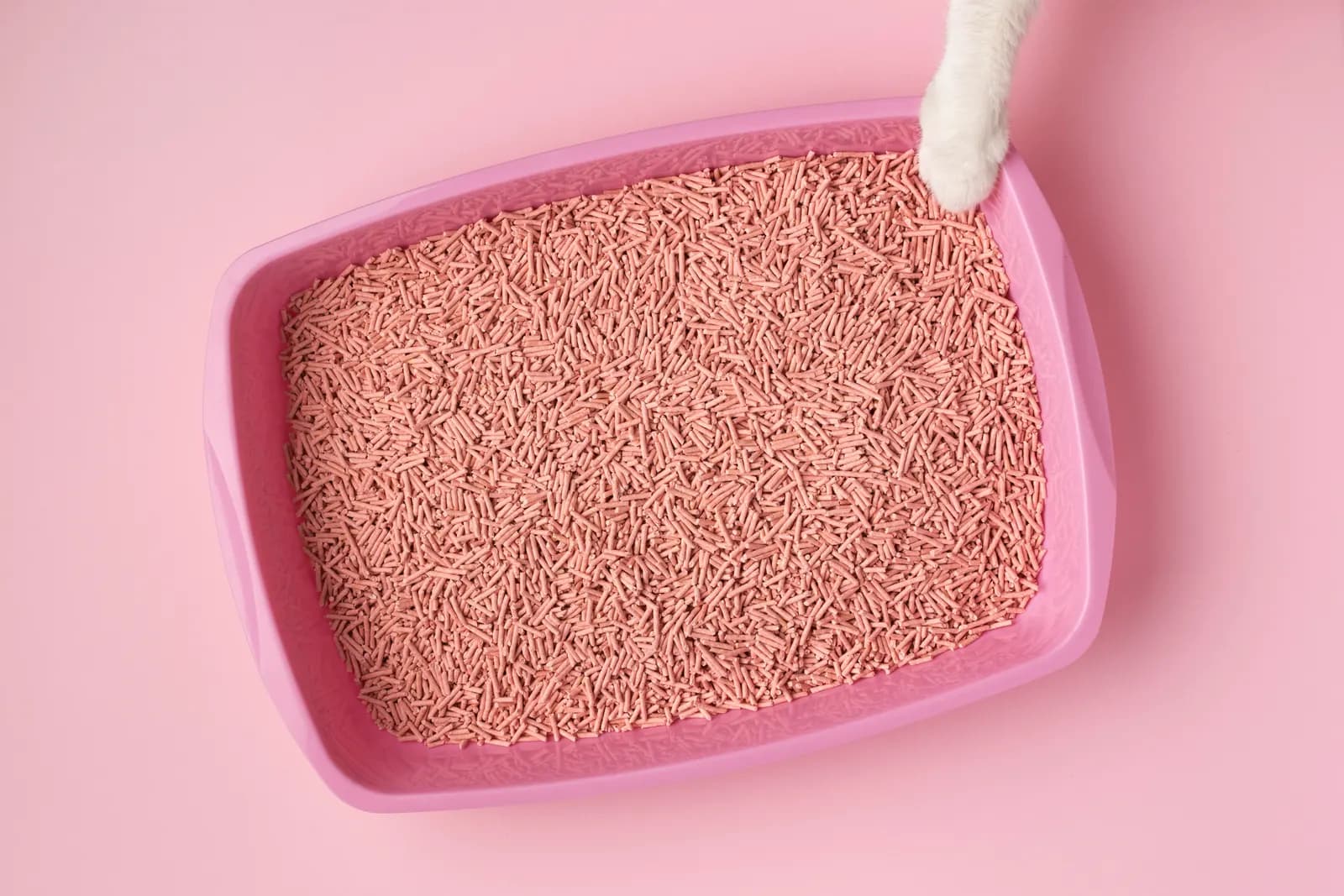
The best cat litter is the one your cat likes to use and that makes cleaning easier for you. For most households that is clumping litter, because the wet part is easily removed with a scoop and the rest stays clean. Absorbent mineral litter and litter made from plant fibres are a good choice when you want less dust, lower weight or a biodegradable material.
How you maintain it is just as important as the type of litter: how much you pour in, how often you clean and where the tray stands. Below are answers to the questions cat owners ask most often.
What types of cat litter are there?
| Type of litter | How it works | Who it suits |
|---|---|---|
| Clumping (bentonite clay based) | On contact with liquid it forms a firm clump that is removed with a scoop | Most cats and owners, households with several cats |
| Absorbent mineral (for example sepiolite) | Granules absorb liquid and bind odour, usually without clumping | Owners who change the entire contents of the tray at once |
| Plant or wood fibre | Absorbs and clumps, is light and biodegradable | Those who want a naturally renewable material and a lighter bag |
Within each group there are scented and unscented variants, coarser and finer granulation, as well as litter with activated carbon for stronger odour binding. Finer litter is gentler on paws, but is more easily spread around the flat. Coarser litter is spread less, and some cats like it less.
How to choose litter for your cat?
- Start from the cat's habit. If you adopted your cat, ask what litter it is used to and start with the same.
- Sensitive nose. Cats have a much stronger sense of smell than humans. If your cat avoids a tray with scented litter, try an unscented variety.
- Dust. If someone in the house has an allergy or asthma, choose litter for which the manufacturer states a low dust content and pour it slowly, low above the tray.
- Kittens. Very small kittens may try the litter. Until they grow up, many vets advise non-clumping litter.
- Several cats. Look for litter with stronger odour control and firm clumps, because the tray is used much more often.
When you change the type of litter, do it gradually. For a few days mix the new litter with the old, increasing the share of new litter each time. A sudden change is a common reason a cat starts to toilet outside the tray.
How much litter to pour in and how often to change it?
- Pour in a layer of 5 to 7 centimetres. A layer that is too thin soaks through to the bottom quickly, and one that is too thick is wasted.
- Clean every day. Remove clumps and faeces with a scoop at least once a day, preferably twice.
- Top up with fresh litter so the layer stays the same depth.
- Change the entire contents regularly. Non-clumping litter is changed roughly once a week, and clumping litter every two to four weeks, depending on the number of cats and the manufacturer's instructions.
- Wash the tray with warm water and a mild detergent without strong fragrance, then dry it well before refilling. Strongly scented products can put a cat off.
Used litter goes into household waste, in a tied bag. Do not flush it down the toilet, unless the manufacturer explicitly allows it. Pregnant women should leave cleaning the tray to another member of the household or use gloves and wash their hands well, and should consult their doctor about the risk of toxoplasmosis.
Where to place the cat litter tray?
The tray should stand in a quiet, easily accessible place, away from food and water bowls. A hallway next to the front door or an area beside a washing machine that spins loudly are not good choices. A rule that has worked well in practice is: one tray per cat plus one extra. The tray should be large enough for the cat to turn around in, roughly one and a half times the length of the cat's body without its tail.
A closed tray with a lid holds more odour and litter inside, but some cats do not accept it. If you are introducing it for the first time, leave the lid off for a few days.
Caring for a cat in a flat: what else is needed?
- Scratching post. Scratching is a natural need. A stable scratching post next to the place where the cat sleeps protects the furniture.
- Play and movement. Two short play sessions a day, of ten to fifteen minutes, help a cat that does not go outside to use up energy and keep its weight.
- Water. Cats naturally drink little. Offer fresh water in several places, and let part of the diet be wet food.
- Suitable food. Neutered cats and cats that live only indoors gain weight more easily, so food designed for them suits them best.
- Safety. Secure windows and the balcony with a protective net, and keep houseplants that are poisonous to cats, such as lilies, out of reach or do not bring them into the flat.
When to visit the vet?
The litter tray is also a good indicator of health. Contact the vet if a cat suddenly starts urinating outside the tray, if it goes into the tray often but passes little urine, if it strains or cries while doing so, or if you notice blood in the urine. In a male that is straining but cannot pass urine, this is an emergency and you should not wait.
Next steps
Choose one type of litter, give your cat two weeks to get used to it and monitor how easy the cleaning is for you. In the category Cats you will find Biokat's and Petsand clumping litter, plant and wood fibre litter from the Biokat's Organic Care range, as well as Lechat sepiolite mineral litter, along with food, treats and equipment for cats. An overview of all brands is on the Brands page.
Do you have a dog too? Read our guide to how to choose dog food. The whole pet range is in the Zoo department, and you can also see litter and equipment in Agricom stores and garden centres, whose addresses are on the Stores page.