
Houseplants need less water in winter, little or no fertiliser and as much light as possible. Most green plants are dormant or grow very slowly from November to February, so the most common winter mistake is too much care: watering too often and feeding a plant that cannot use the nutrients. Leave repotting for the end of winter and spring, unless it is an emergency.
Below is a short guide to winter care: how to water, when and what to feed with, how to tell that a plant needs a bigger pot and how to repot it correctly.
How to water houseplants in winter?
In winter the days are short, the plant uses less water and the soil dries more slowly. So do not water by the calendar, but according to the condition of the growing medium.
- Check with your finger. Water only when the top two to three centimetres of soil are dry. Cacti and succulents need very little water in winter.
- Use settled water at room temperature. Cold tap water is a shock for the roots of tropical plants.
- Empty the saucer. Water standing in the saucer for longer than half an hour suffocates the roots and causes rot.
- Watch plants above radiators. The soil dries faster there, so it is better to move them than to water them more often.
Yellow, soft lower leaves and soil that constantly smells damp are signs of too much water. Brown, dry leaf tips more often point to dry air than to thirst.
Light, warmth and air humidity
In winter, move plants closer to the window, because the amount of light drops noticeably even a metre away from the glass. Wipe the leaves now and then with a damp cloth, as dust blocks additional light. Turn the pot slightly every week so the plant grows evenly.
Most tropical houseplants are happy at 18 to 22 degrees, without sudden changes. Do not keep them next to a radiator, but also not on a cold windowsill beside an open window. Heating dries the air, so group the plants together, place the pots on a tray with pebbles and water, or use a humidifier.
Should houseplants be fed in winter?
The rule is simple: feed a plant that is growing or flowering.
| Type of plant | Feeding from November to February |
|---|---|
| Green leafy plants (ficus, monstera, zamioculcas, sansevieria, ferns) | No feeding, or at most once a month, at half the strength |
| Plants that flower in winter (cyclamen, Christmas cactus, orchid in bloom) | Regularly, with a fertiliser for flowering plants or for orchids, according to the instructions |
| Cacti and succulents | No feeding until spring |
| Freshly repotted plants | No feeding for the first four to six weeks |
Start regular feeding again in March, when the plants put out new leaves, and continue until the beginning of autumn. Liquid fertiliser is added to the watering water, always on moist growing medium and at the dose stated on the pack. A stronger dose will not speed up growth and can damage the roots. For green leafy plants choose a fertiliser meant for green plants, such as Plantella List, and for flowering species a fertiliser for flowering plants, such as Plantella Cvet. If you often forget to feed, slow-release sticks that are pushed into the soil are practical.
When to repot a houseplant?
The best time to repot is from late February to April, when the plant enters its growth period and quickly takes root in new soil. Young plants are repotted every year, older ones every two to three years. For large plants it is enough to replace the top few centimetres of growing medium.
A plant needs a bigger pot if:
- roots come out through the holes at the bottom or are visible on the surface,
- water runs straight through the pot when watering,
- the plant has stopped growing although it has enough light,
- the pot tips over because the above-ground part is too heavy,
- there are white salt deposits on the soil surface.
In winter, repot only when necessary: for root rot, a serious pest attack in the soil, or when the pot breaks.
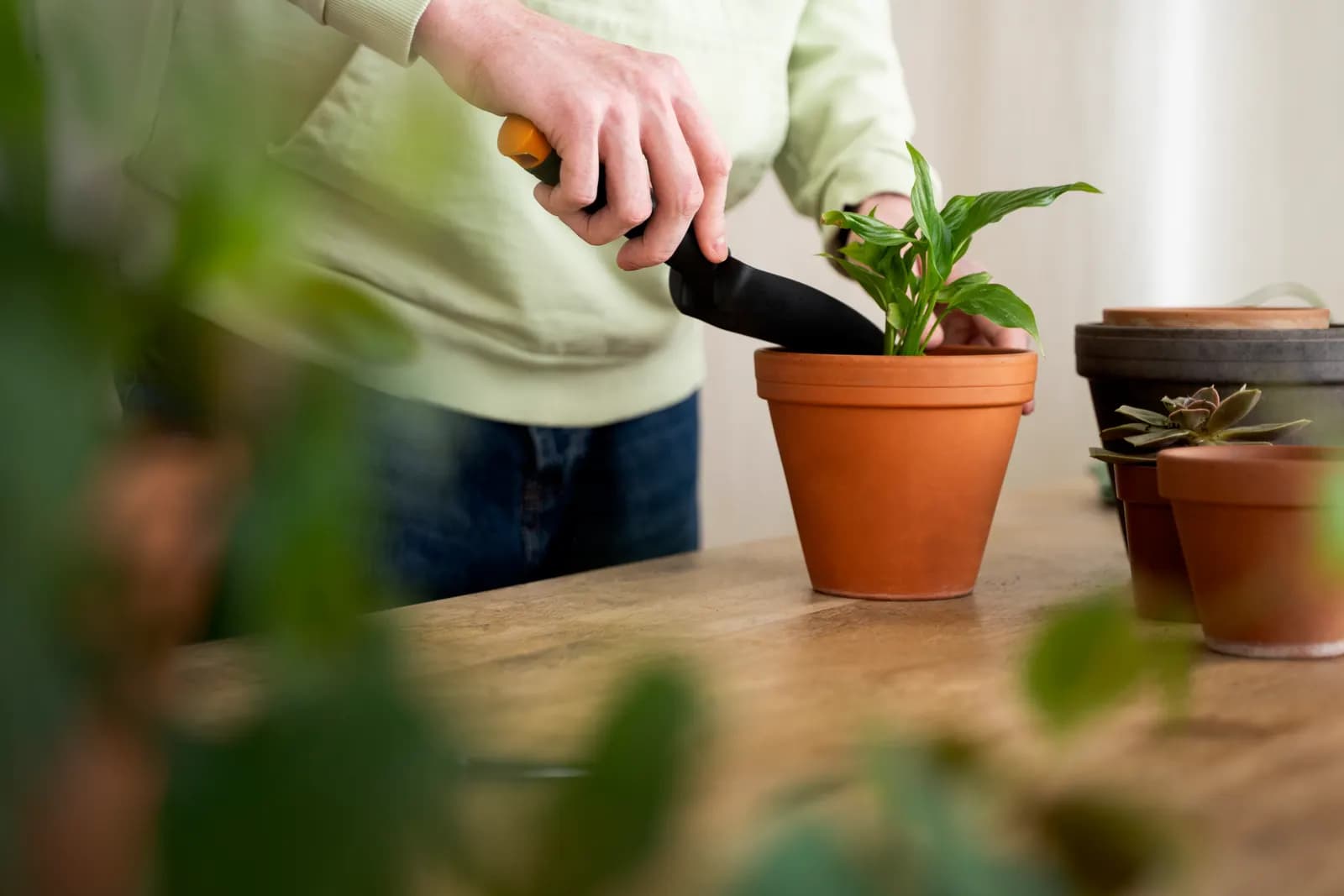
How to repot a plant step by step
- The day before, water the plant so the root ball comes out more easily.
- Choose a pot that is two to four centimetres wider in diameter, always with drainage holes. An oversized pot stays wet for a long time.
- Put a layer of drainage at the bottom, for example clay pebbles, and a little fresh growing medium on top.
- Take the plant out, gently loosen the old growing medium and cut off rotten and dry roots.
- Set the plant at the same depth it was before, add growing medium at the sides and press lightly.
- Water it and keep the plant about ten days away from direct sun.
Choose the growing medium according to the plant. For most houseplants a good quality soil for indoor and balcony plants, such as Plantella Balkonia, is suitable. Orchids need an airy bark-based growing medium, and cacti a free-draining, sandy mix.
Winter pests on houseplants
Dry, warm air favours red spider mites, and overly wet soil favours small black flies that fly around the pot. Check the undersides of leaves and the leaf axils regularly, where scale insects and mealybugs hide. Separate an infested plant from the others, wash the leaves with lukewarm water and reduce watering. Yellow sticky traps pushed into the pot are useful for catching flies. If you use plant protection products, read the label and instructions before use and use them safely.
Next steps
This week, go through all the plants in your flat: check soil moisture, wipe the leaves and note which ones will need a bigger pot in spring. You will find Plantella growing media and fertilisers for houseplants, orchids and flowering species in the category Fertilisers and soil, sticky traps and leaf care products in the category Plant protection products, and pots in the category Accessories.
When repotting time comes, see also the other tasks in the calendar for March. Everything you need for houseplants is also available in Agricom stores and garden centres. Find the nearest one on the Stores page.