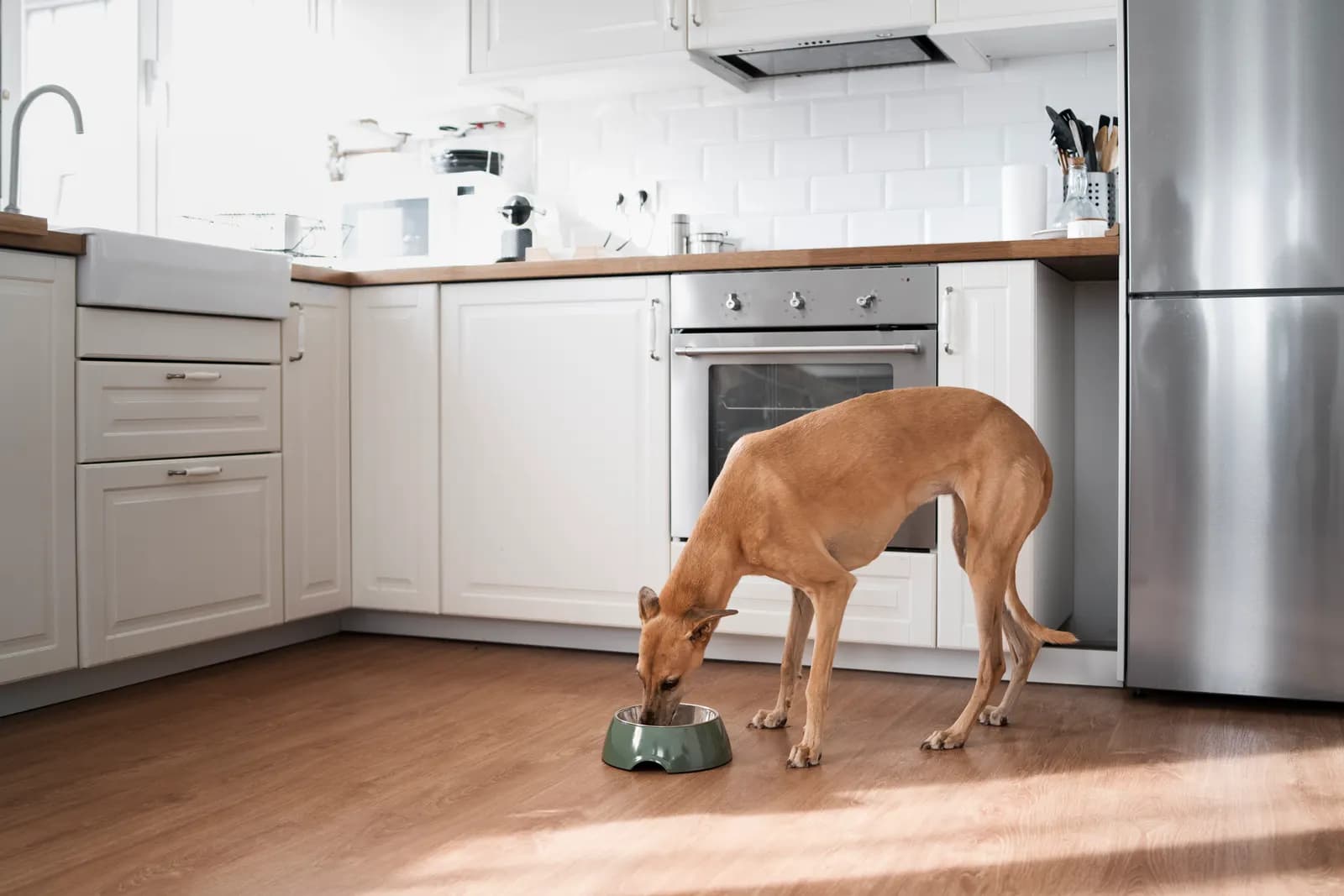
You choose the right food for your dog according to three things: age, size and activity. A puppy needs food for growth, an adult dog needs food to maintain condition, and a senior dog needs lighter food that protects its joints and body weight. Only after that comes the question of dry or wet food, flavour and pack size.
Below is a short guide that will help you quickly recognise on the shelf what suits your dog, how many meals it needs and how to introduce new food without digestive problems.
What should you look at on the pack first?
On every bag or tin look for three pieces of information. They tell you more than the picture on the front.
- Complete or complementary food. Complete food covers all of a dog's daily needs and can be its only meal. Complementary food, treats and snacks serve only as an addition.
- Who it is intended for. Manufacturers clearly state the age (puppies and juniors, adult dogs, senior dogs) and often the size of the breed (mini, medium, large breeds).
- Composition and recommended daily amount. Ingredients are listed by proportion, from largest to smallest. The feeding table on the back shows how many grams per day a dog of a certain weight needs.
Puppy food: when and how much?
A puppy grows quickly and needs more energy, protein and minerals per kilogram of body weight than an adult dog. That is why it is given food labelled for puppies and juniors, not a smaller portion of adult food. Puppy kibble is also smaller, so small teeth can chew it more easily.
Divide the daily amount into several smaller meals. Puppies of large breeds grow for longer and are more sensitive to growing too fast, so for them it is best to choose food that is specifically intended for large-breed puppies and to keep to the recommended amount.
| Age of dog | Type of food | Number of meals per day |
|---|---|---|
| From weaning to 6 months | Puppy food | 3 to 4 |
| From 6 to about 12 months (large breeds up to 18 to 24 months) | Puppy and junior food | 2 to 3 |
| Adult dog | Adult dog food, according to size and activity | 2 |
| Senior dog, from about 7 years | Senior dog food or light food | 2, and if needed 3 smaller |
The limits in the table are approximate. Small breeds mature earlier and age later, while large breeds mature more slowly but enter senior age earlier. If you are not sure when to switch to adult food, ask your vet at a routine vaccination.
Adult and senior dog food
Adult dog
An adult dog needs food that keeps its weight stable. An active dog that runs or works a lot uses considerably more energy than a dog that spends most of the day in a flat. Neutered dogs and dogs that move little are more prone to weight gain, so food with less fat or a slightly smaller portion suits them better. A good guide is the dog's body: the ribs should be easy to feel under the fingers, and seen from above the dog should have a visible waist.
Senior dog
Older dogs move less, digest food more slowly and often have more sensitive teeth. Senior dog food usually has fewer calories and an adjusted composition. If a dog chews with difficulty, wet food or kibble briefly soaked in lukewarm water can make the meal easier. Any sudden change in appetite, weight or the amount of water the dog drinks is worth checking with the vet.
Dry or wet dog food?
Both types can be complete food, so the choice depends on the dog and on your routine.
- Dry food (kibble) contains little moisture, so it is economical, easy to portion and stays fresh for a long time in a well-closed bag. It is practical for larger dogs and for feeding by exact weight.
- Wet food (tins, pates, pieces in gravy) contains about three quarters water, is more aromatic and tastier for fussy dogs, and also helps dogs that drink little. Keep an opened tin covered in the fridge and use it within two days.
- A combination is a common choice: kibble as the base and a spoon or two of wet food as an addition. In that case reduce the amount of kibble so that the total calorie intake stays the same.
Whatever food you use, fresh water should always be available to the dog, and especially so with dry food.
How to switch to new food?
A sudden change of food often ends with soft stools. Introduce the new food gradually, over seven days:
- First and second day: three quarters old food and one quarter new food.
- Third and fourth day: half old food and half new food.
- Fifth and sixth day: one quarter old food and three quarters new food.
- Seventh day: only new food.
If vomiting, diarrhoea lasting longer than one day, itching or red skin appear, return to the old food and contact your vet. Dogs with allergies, or with kidney, liver or digestive disorders, should have their food prescribed by a vet.
The most common mistakes in dog feeding
- Feeding "by eye". Weigh the daily portion at least once and use the same measuring scoop.
- Too many treats. Keep treats a small part of the daily intake and count them in the total amount of food.
- Leftovers from the table. Chocolate, grapes and raisins, red and white onion, products sweetened with the sugar substitute xylitol and cooked bones can be dangerous for dogs.
- Poor storage. Keep kibble in its original bag, well closed, in a dry and cool place.
Next steps
Write down your dog's weight, age and activity level, and narrow your choice accordingly. In the category dog food and equipment you will find dry and wet food from brands such as Monge, Gemon, Special Dog, Simba and Farmina N&D, as well as our own brand Monami. Gemon and Special Dog, for example, have special recipes for puppies and juniors, and light variants for senior dogs are also available. You can browse all brands on the Brands page.
If you also have a cat, see the range in the category Cats, and the rest of the pet range in the Zoo department. You can also look at the food in person in Agricom stores and garden centres: addresses and opening hours are on the Stores page.