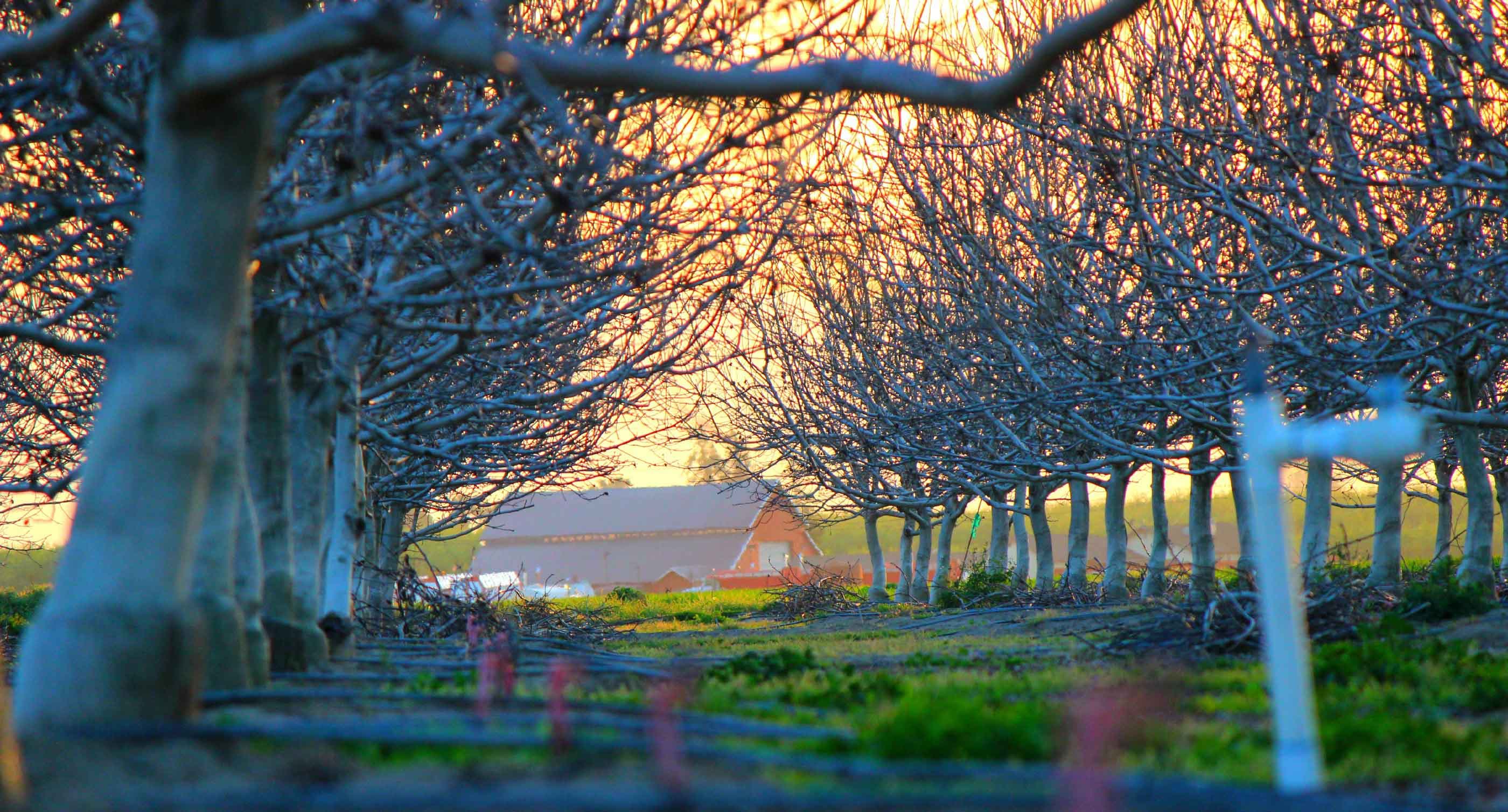
After the growing season, fruit trees must be prepared as well as possible for the dormant period, the number of pests reduced, and the infection potential of various pathogens lowered. In fallen fruit and leaves, in mechanical wounds and under the bark, various forms of pests and pathogens overwinter, which, if we do not take certain measures, can reduce the quality of the fruit itself and even destroy the whole tree. After the fruit is harvested, shrivelled, that is, mummified fruit must be removed from the trees. The same applies to leaves, because such places are ideal hiding places for various forms of insects and diseases to overwinter, and they also attract rodents.
Winter pruning is very important for future yield and fruit quality. The pruning itself gives the plant better air circulation and more light. This pruning removes from the tree all broken, dry, damaged and infected branches. Cuts should be as small as possible, because at lower temperatures they cannot heal completely, and such places are more susceptible to pest attack. All cuts, and especially the larger ones, should be protected with wax or resin, such as Plantella Arbosan resin, which covers wounds and other damage very well and disinfects them, thereby preventing the entry of disease into the plant, while allowing the plant to heal more easily and quickly.
In addition to pruning, we also carry out blue spraying, most often with blue oil, which controls many diseases and disinfects the orchard. The causal agents of diseases overwinter in the canopy of the trees, hidden in cracks in the bark, in buds, in canker wounds, in rotten organs and in other hidden places. That is why “blue spraying” must be carried out in good time, that is, at the place where they overwinter, so that the pest attack in spring is reduced to a minimum. The best time for treatment is when about 50-60% of the leaves have fallen from the trees. A complete “bath” of the trees must be carried out.
We fertilise the fruit trees with the organic fertiliser Plantella Organik and with mineral fertilisers that contain a larger amount of phosphorus and potassium. It directly affects the maintenance of soil fertility and structure, the growth of the plant, strengthens its resistance, and contributes to better yield and fruit quality.
Young trees need to be protected with mesh guards against rodents, which can cause great damage during winter. Damaged trees become stunted in growth, are sensitive to low temperatures and frosts, and very often because of such damage they may even die. Only after 12 years do the root and the base of the trunk harden enough that rodents no longer attack them.
Whitewashing of orchards is carried out in October and November. The purpose of whitewashing is that the white colour reflects the sun's rays, which slows the movement of plant sap and prevents the start of vegetation and frost damage, which is especially important for late spring frosts. Also, trap bands are placed around trees, which stop insects. Bio Plantella sticky band is an excellent mechanical and completely natural protection of fruit trees, shrubs and ornamental trees against a wide range of pests.


Planting fruit trees
The best time to plant fruit trees is autumn. In this period the soil is still warm and moist, the roots start growing straight away, and damaged roots heal better. In such conditions the plant overwinters better and creates better conditions for intensive growth in spring. It is important to choose a good seedling and to follow the correct guidelines for planting, so that we give the plant a good start and proper development. The development of the seedling depends to a great extent on the quality of the soil in which it grows, and only in well-prepared soil rich in humus and nutrients can the seedling develop a healthy root system and grow into a healthy plant.
How to choose the best seedling?
Before you decide which variety to choose, you must take into account the planned layout of the orchard, and what appearance and size the fruit variety will have at full growth. Before planting the seedling, it is important to make sure the roots are healthy and undamaged. Broken or damaged roots should be cut back to the healthy part, and the soil should not be removed from the roots.
How to plant correctly and restore the quality of the soil?
Once we have determined the final position and place for planting, it is time to prepare the planting holes. It is important that the hole is big enough and gives the roots enough room to spread out. Ideally, digging should be done in dry weather so that the soil is loose. The hole should be wide enough (at least 50 cm) and deep (40 cm). If the soil is heavy, clayey and compacted, mix it with Plantella Ideal so that it is aerated and the roots can grow unhindered.
Add Plantella Organik to the bottom of the hole. It has the highest percentage of dry matter from organic matter and so increases the proportion of organic matter in the soil. Plantella Organik also improves the water and air system in the soil and leads to better rooting of the seedling. In addition to organic matter it improves the macro and micro substances needed for plant development, which is key for the development of the seedling, lush flowering and an abundant crop. Cover the fertiliser with a layer of soil so that the root does not touch the fertiliser. It is important to make sure that the grafted place is 5-20 cm above the soil, and you will recognise it as a thickening 5-15 cm above the root system. Mix Plantella Organik fertiliser with the soil and thoroughly cover the seedling.
Press the soil around the roots well so that no air pockets remain and water is not retained, which can cause root rot. Also, a wooden stake should be placed next to each new seedling. Always place the stake on the same side of the seedling, because it protects the seedling from the adverse effect of wind, and usefully reduces the danger of freezing and scorching.